
Cost
Concrete Slab Cost in Gurnee
The published total, the distinction that decides half your quote, and why "slab" covers four jobs priced on completely different logic.
Before the numbers, one distinction, because it decides more of your quote than anything else on this page. Some concrete holds a building up. Some concrete just sits on the ground. Those are not the same purchase, they do not cost the same, and the word "slab" gets used for both.
What the national guides publish
HomeGuide leads with a project total instead of just a rate. For a thirty-foot square they give $5,400 at the low end and $10,800 at the high, working out near $6 to $12 a square foot with labour in. Materials alone they put at three to seven dollars a foot, with most slabs finishing somewhere between four and six inches thick.
Useful as an opening frame. It is their national dataset though, and this county is not the national average.
Why that total reads low here
Averaging the whole country means averaging in places where nobody has to think about frost. Where the ground never heaves, the sub-base can be thinner, the mix does not need air deliberately whipped into it, and joint layout is a nicety rather than a necessity. Every one of those savings is inside the figure above.
In Lake County the money that makes a slab last goes somewhere you will never see once the pour cures: the stone underneath, how thoroughly it was consolidated, and what the plant put in the truck. Which is precisely why the cheapest quote is so often the one that skimps there.
Footings or flatwork: the question worth settling first
Lake County adopted forty-two inches below grade as its footing depth. Confirm with your own village before anything structural, since amendments vary, but that is the county baseline.
Here is what matters for your quote: that figure has nothing to do with flatwork. A garage floor, a shed base, a patio - these rest on the ground and move gently with it. They want good compacted stone beneath them and sensible joints, not piers driven below the frost line.
An addition is the opposite case. It carries structure, so it needs real footings at real depth, and it belongs in a different price bracket entirely. If a bid for a simple pad quotes deep footings, something is either misunderstood or padded. If a bid for an addition does not, walk.
Four jobs wearing one word
An addition or room extension
The most involved of the four and the only one on this list with a genuine footing requirement. Expect engineered detail, inspections, and a number well clear of the national slab average. We pour the concrete and work to the builder's drawings; we are not the general contractor on the addition itself.
A detached garage floor
Straightforward when the site is straightforward. What decides longevity is the fill beneath and whether the finished level drains toward the door instead of pooling at the back, the same two things that decide whether a patio slab is still flat in ten years. Heavier use - a lift, machinery, a workshop - changes the specification, and it should be discussed rather than assumed either way.
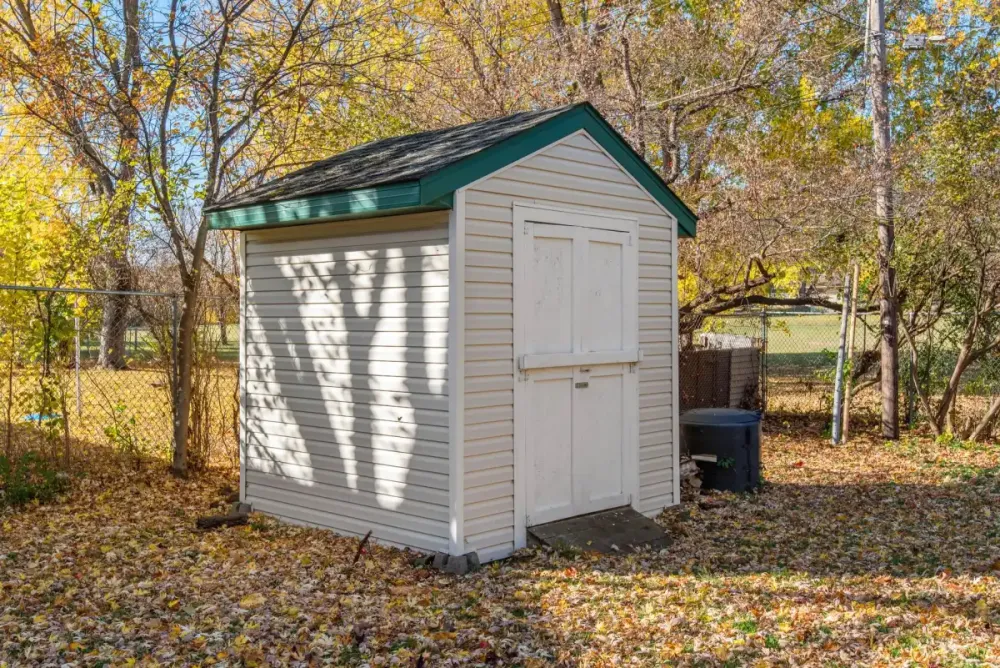
Shed and equipment pads
Typically the least expensive job we quote, though rarely the cheapest per foot. Small pours carry the same truck, the same crew and the same setup as large ones, so the fixed costs land on fewer square feet. That arithmetic surprises people every time, and it runs the other way on the biggest pours: replacing a whole driveway spreads the same setup across the largest slab on the property.
Pole barn and outbuilding floors
No published standard thickness exists for these. The four inch figure that circulates online comes from residential code covering houses and attached garages. A building storing a tractor, a boat or pallet racking imposes loads that code never contemplated, so the floor is designed to the use. Anybody quoting one off a rate card without asking what goes inside is quoting a number rather than a floor.
Get a real number for your slab
Four quick questions and a local concrete contractor will be in touch to set up a free on-site estimate. "Just pricing it out" is a perfectly good answer.
Where the money actually goes
Everything below the concrete. Stripping to a firm bottom, importing stone, and rolling it down in stages rather than dumping it in one lift. Saturated or frozen subgrade has to be dealt with, not built over. When slabs in this county fail early, this is nearly always the reason.
Whether a truck can reach it. A chute reaching the forms directly is the inexpensive scenario. Rear gardens behind gates, changes in level, and side passages too narrow for a barrow all mean the concrete gets moved the hard way, and that is billed in hours.
Taking the old one away. Existing concrete has to be broken, lifted and carried off, and tips charge by weight for it. Ask whether that sits inside the quoted figure or arrives afterwards as an extra.
What you order from the plant. Air deliberately entrained into the mix is what lets a surface survive repeated freezing - the target sits between four and seven percent of volume, with Illinois guidance around 4,000 psi at 6.5 percent give or take one and a half. A slab exposed to salt is a tougher case again and should be ordered as one.
Ask every bidder these
- Is this a slab on grade or does it carry load, and are footings priced in?
- How deep is the stone going, and in how many passes?
- What air spec did you request from the plant for this particular pour?
- Draw me the joint pattern and tell me the saw depth.
- Break out the demolition and disposal as its own line, please.
Cracks, and choosing where they go
All concrete cracks in the end. Control over the location comes from cutting relief joints early and at the right pitch: spacing of two to three dozen times the pour depth, roughly ten feet on a four inch slab, with Illinois guidance keeping it to ten or under and fifteen as a hard ceiling. Depth is a quarter of the slab and never below an inch. Miss on either and the concrete relieves itself wherever it likes.
Steel does not stop this happening. What reinforcement does is hold a crack tight once it has formed, which is worth having but is not the promise it is often sold as. If cracking is what has you leaning toward pavers, read how a concrete patio stacks up against pavers and a deck first: pavers trade the crack for movement, and movement repeats.
Getting it through its first February
Nothing on it for a week. After that, keep chemicals off entirely until one winter has passed. Fresh concrete carries a lot of moisture and has not built the resilience to be frozen wet, and deicers attack on both fronts at once by trapping damp at the surface and adding freeze cycles.
Ignore the widespread suggestion that magnesium or calcium chloride is a softer option. Regional ready mix guidance lists both as products to keep off concrete, and comparative testing by Oregon's transportation department found magnesium chloride stripped more compressive strength than the other chlorides examined. Sand or grit for grip, nothing dissolved.
Sealing waits a month from the pour, then comes round again every few years.
Sources
- HomeGuide - national concrete slab totals and cost per square foot. Verified 2026-08-17.
- Lake County Code § 150.17 - 42 inch frost line for footings.
- Illinois Ready Mixed Concrete Association - regional mix, air content and joint guidance.
- American Cement Association - air entrainment and freeze-thaw durability.
- Oregon DOT SPR 742 - comparative chloride deicer strength loss.